Finding the Best Paper Cup Manufacturer for Your Eco Friendly Business

Picking a partner for your eco-friendly packaging isn’t just about finding any supplier; it’s about navigating a landscape full of claims and complexities. When you’re looking for a paper cup manufacturer, the real challenge isn’t simply locating one, it’s identifying a partner who genuinely walks the talk on sustainability and can consistently deliver the quality your brand needs.
Many brands get stuck focusing solely on the “eco-friendly” label, forgetting that true sustainability is a multifaceted commitment, not just a marketing buzzword. You need to dig deeper, beyond the glossy brochures, to uncover what truly sets a reliable, environmentally conscious paper cup producer apart from the rest.
Beyond the Brochure: What *Really* Defines an Eco-Friendly Paper Cup Manufacturer?
It’s easy to get swept up by certifications and feel-good messaging. But what does it mean for a paper cup maker to be truly eco-friendly? It’s far more than just using paper instead of plastic. We’re talking about a holistic approach that impacts everything from raw material sourcing to the energy powering their factory floors.
Are sustainable materials truly sustainable?
When you look at a cup, you’re seeing more than just paper. You’re seeing coatings, adhesives, and inks. For a truly sustainable cup, the base paper must come from responsibly managed forests, ideally with Forest Stewardship Council (FSC) or Programme for the Endorsement of Forest Certification (PEFC) credentials. But that’s just the start. The real material debate often centers on the lining.
Traditionally, polyethylene (PE) has been the go-to, providing that crucial liquid barrier. The problem? It complicates recycling, as separating the plastic from the paper is energy-intensive and not widely available at municipal facilities. We’ve seen a shift towards alternatives like polylactic acid (PLA), a bioplastic derived from renewable resources like corn starch. While PLA is a step in the right direction, it’s not a magic bullet. It requires industrial composting facilities, which aren’t universally accessible, and it still doesn’t biodegrade in a backyard compost pile.
The latest innovation, and what we genuinely champion, involves water-based dispersion coatings. These coatings provide an effective barrier but are designed to separate easily from the paper fiber during the recycling process, often making the cups compatible with existing paper recycling streams. This is a game-changer because it means these cups can actually become new paper products, closing the loop more effectively. When evaluating a supplier, you need to press them on these specifics: what exactly is their lining made of? What are its end-of-life pathways? Don’t just accept “eco-friendly” at face value; demand clarity on the material science.
Does their production process actually minimize impact?
Even with the most sustainable materials, a manufacturer’s operational footprint can negate many of those gains. You’re looking for a production process that minimizes energy consumption, water usage, and waste generation. This isn’t just about compliance; it’s about a company’s commitment to continuous improvement and innovation.
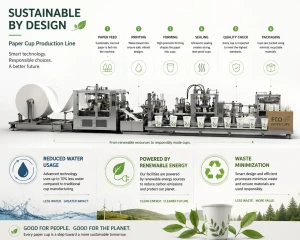
Ask about their energy sources. Do they use renewable energy, either through direct generation like solar panels or by purchasing renewable energy credits? What about water? Cup manufacturing can be water-intensive. Are they employing closed-loop systems for water recycling, minimizing fresh water intake and wastewater discharge? These aren’t trivial questions; they reflect a producer’s true dedication to environmental stewardship.
Waste management is another critical area. A truly eco-conscious supplier will have robust programs for recycling their own manufacturing scrap, preventing materials from ending up in landfills. They should be able to articulate their waste reduction targets and demonstrate how they track progress. This level of detail shows a maturity in their sustainability efforts that goes beyond superficial branding.
The Hidden Costs of Going Green (and How to Avoid Them)
Opting for sustainable packaging often comes with the perception of higher costs, and sometimes, that’s true. But the “hidden costs” aren’t always monetary; they can be reputational or operational if you don’t choose your supplier wisely. It’s about making smart investments that pay off in brand value and genuine environmental impact.
Can you ensure supply chain transparency without breaking the bank?
Supply chain transparency is paramount, especially when you’re making sustainability claims to your customers. You need to know where the paper comes from, how it’s processed, and under what conditions. This requires more than just a certificate; it demands a supplier with robust auditing practices and a willingness to share detailed information.
Initially, investing in a supplier with strong certifications and transparent practices might seem pricier. However, the alternative can be far more expensive. Imagine a public relations nightmare if a hidden unethical labor practice or unsustainable logging operation in your supply chain comes to light. The brand damage alone could far outweigh any initial savings. Look for suppliers who proactively offer documentation, participate in third-party audits, and have clear policies on ethical sourcing. They should be able to trace their raw materials back to their origin with confidence. This isn’t just about doing good; it’s about protecting your brand’s reputation.
Is “compostable” always what it seems?
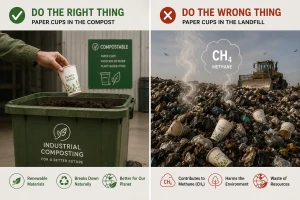
The term “compostable” is a powerful one, but it’s also frequently misunderstood, both by brands and consumers. When a packaging supplier tells you their cups are compostable, your next question should always be: “Under what conditions?”
Many “compostable” cups are only industrially compostable, meaning they require specific conditions of heat, moisture, and microbial activity found in commercial composting facilities. These facilities are not available everywhere, and even where they exist, collection infrastructure for compostable packaging can be patchy. A cup that’s industrially compostable but ends up in a landfill due to lack of infrastructure isn’t helping anyone. It will likely degrade anaerobically, producing methane, a potent greenhouse gas.
You need to understand the end-of-life reality for your customers. If your target market doesn’t have access to industrial composting, then a “compostable” cup might not be the most responsible choice. In such cases, a cup designed for traditional paper recycling, perhaps with a water-based barrier, could be the more genuinely sustainable option. A good packaging provider won’t just sell you a product; they’ll help you navigate these nuances and educate your customers effectively, preventing greenwashing accusations.
ChatGPT Image Jun 10, 2026, 05_04_30 PM
Building a Partnership: More Than Just a Supplier
Choosing a packaging supplier isn’t a transactional decision; it’s about forming a strategic partnership. Your cups are an extension of your brand, and the right partner will understand that and work with you to achieve your sustainability goals, not just meet minimum order quantities.
How do you assess a manufacturer’s scalability and innovation?
Your business isn’t static, and neither should your packaging solutions be. A strong supplier has the capacity to grow with you, scaling production up or down as your needs change. This isn’t just about having large machines; it’s about efficient operations, flexible scheduling, and a robust logistics network.
Beyond capacity, look for innovation. The eco-friendly packaging sector is constantly evolving. New materials, coatings, and manufacturing processes emerge regularly. Does your potential partner invest in research and development? Are they actively exploring next-generation solutions? You want a supplier who can offer not just what you need today, but who can also advise you on future trends and help you stay ahead of the curve. This proactive approach shows a commitment to the long haul and a genuine understanding of the market dynamics. Ask about their R&D pipeline and how they plan to adapt to new environmental regulations or consumer demands.
“True partnership in sustainable packaging means anticipating future needs, not just reacting to current demands. It’s about building in resilience.”
What makes a good fit for long-term collaboration?
Ultimately, a successful partnership boils down to shared values and effective communication. Your packaging provider should understand your brand’s mission, your sustainability objectives, and your market challenges. It’s not just about producing cups; it’s about helping you tell your brand story through responsible packaging.
Look for flexibility in their approach. Can they accommodate custom designs, specific printing requirements, or even smaller test runs before a full commitment? How responsive are they to inquiries and concerns? A supplier who communicates openly, provides regular updates, and is willing to collaborate on solutions for unexpected issues is invaluable. They should feel like an extension of your team, not just a vendor you call when you need to reorder.
Consider their commitment to quality control. Consistent product quality is non-negotiable. Ask about their quality assurance processes, their defect rates, and how they handle discrepancies. A reliable partner will have transparent systems in place to ensure every batch of cups meets your specifications and maintains your brand’s integrity. When you choose PapMaker, you’re not just getting a product; you’re gaining a partner dedicated to clarity and excellence in sustainable paper packaging.
Ready to elevate your brand with truly sustainable, high-quality paper packaging? We’re here to help you navigate the complexities and find the perfect solution. Connect with us to discuss your specific needs and discover how PapMaker can become your trusted paper cup manufacturer.
Frequently asked questions
Q: What’s the biggest challenge in finding a truly eco-friendly paper cup manufacturer?
A: The biggest challenge is distinguishing genuine sustainability from marketing claims. Many manufacturers use terms like “eco-friendly” broadly. You need to scrutinize their material science (e.g., specific coatings like water-based dispersion instead of just “biodegradable”), their operational footprint (renewable energy use, water recycling), and their supply chain transparency to ensure their practices align with true environmental stewardship.
Q: How can I verify a paper cup manufacturer’s sustainability claims?
A: Look for third-party certifications such as FSC or PEFC for paper sourcing, and certifications for their coatings (e.g., industrial compostability standards like EN 13432 if applicable). Request detailed documentation on their manufacturing processes, energy sources, waste management, and water usage. A truly transparent supplier will be happy to provide this evidence and discuss their environmental performance metrics.
Q: Are “compostable” paper cups always the best eco-friendly option?
A: Not always. While “compostable” sounds ideal, most require industrial composting facilities, which are not widely available or accessible to all consumers. If your customers lack access to these specific facilities, a compostable cup might end up in a landfill, where it doesn’t properly degrade. In such cases, a paper cup designed for traditional paper recycling, often featuring water-based barrier coatings, might offer a more practical and effective end-of-life solution.
Q: What should I prioritize when assessing a manufacturer for long-term partnership?
A: Beyond sustainability credentials, prioritize scalability, innovation, and communication. A good partner can meet your current needs while offering insights into future trends and adapting to your growth. Look for a manufacturer who invests in R&D, offers flexible solutions, maintains consistent quality control, and communicates openly and transparently. They should feel like an extension of your team, not just a vendor.